
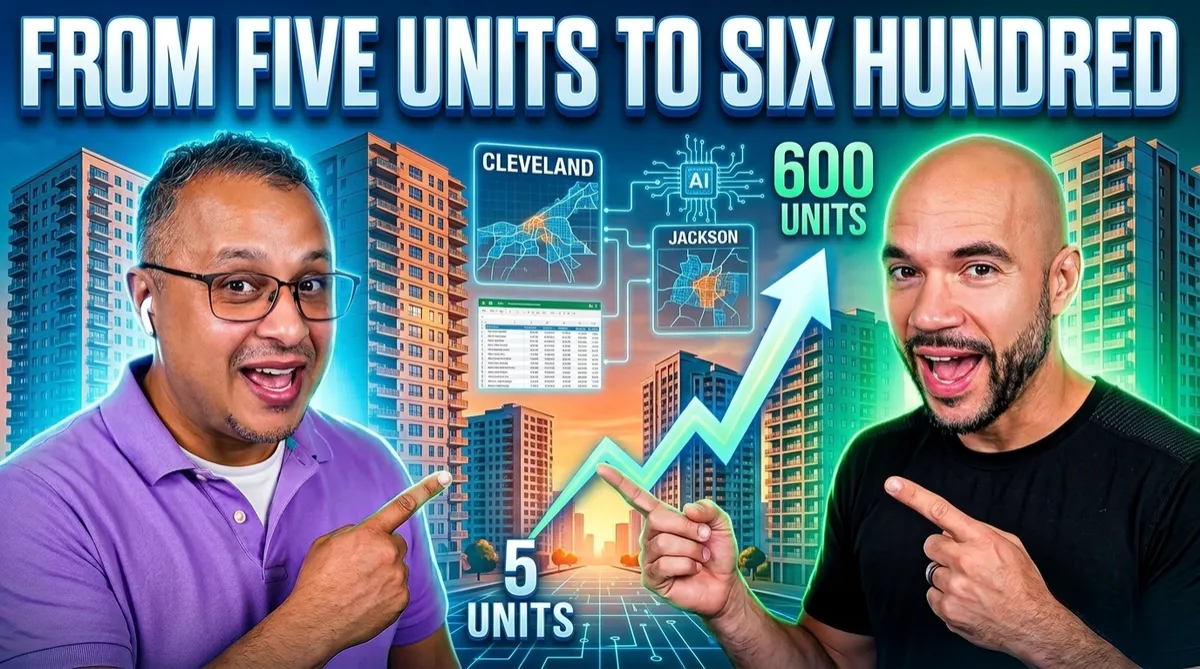
Why He Moved to Cleveland Blind to Invest in Real Estate
A while back, I spent a whole night trying to save a woman's house from a tax lien auction. Her home was paid off and worth about $270,000. I lined up investors, built a plan, and sent her terms before midnight.
The next afternoon, I called to check in. She told me they'd sold the house. To another investor. For $40,000 cash.
I was kicking the door for days.
So when I sat down with my friend Gualter Amarelo on Money Behind the Deal, I asked him how that other investor beat me to it. His answer turned into the theme of the whole episode: the fastest investors already made their decisions before the deal ever shows up.
Here's what I learned from him.
The guy who got me into this game
I owe a lot to Gualter. Years ago I attended his wholesaler boot camp. I figured I'd follow the usual path: wholesale, then flip, then become a landlord, then become the bank.
Gualter gave me different advice. Fix your own business first.
At the time, I ran a digital marketing agency. He told me to keep growing it, because everybody needs leads. That advice is a big reason I'm where I am today as a loan officer, private money broker, and investor.
From HGTV to house hacking
Gualter started out as an accountant. One night, he and his girlfriend were watching HGTV, and she asked if they could ever buy a house.
His answer: "Nobody's told me I can't. Let's go figure it out."
They called a realtor, who connected them to a lender. They bought a fixer-upper. He'll tell you it was more of a lesson than a money-maker.
Then he read Rich Dad Poor Dad and switched to multifamily. He bought a multi-unit property with an owner-occupied FHA loan, lived in one unit, and rented out the rest. Not long after, he bought the building next door.
He went from paying a mortgage to getting paid to live in his own building. That's house hacking, and it's one of the best ways for a first-time buyer to get started.
One more lesson from those early days. He painted his first building himself, and it took forever. On the next one, he hired a painter. He calls it some of the best money he ever spent.
The spreadsheet that changed everything
Gualter is an Excel guy. Back then, he listened to BiggerPockets every day and built a spreadsheet to map his path to financial freedom.
Once he owned real properties, the numbers got better. That's when he realized something big. The secret wasn't one house going up in value. It was owning several appreciating buildings at the same time.
He started focusing on net worth, not just cash flow. That shift changed how he picked every deal after that.
Why he moved to Cleveland without owning a single property
Gualter and his family were living in Florida. He didn't like where prices were heading, so he asked himself a simple question: where is the deal today that I'll be glad I did years from now?
The answer was Cleveland.
Here's the part that surprises people. He moved there with zero properties in the city. He wanted to learn the market on the ground before he bought anything big.
I'm from Cleveland, so I warned him some areas were rough. The worse I made it sound, the more excited he got. He likes buying in tough neighborhoods and making them better.
He also invests in Jackson, Mississippi. Cleveland gives him appreciation. Jackson gives him cash flow, newer buildings, and no frozen pipes in the winter.
The family planned a short stay in Cleveland. Then they fell in love with it. Parks, water, nature, and, his wife's favorite part, no alligators.
Watch the full conversation
Gualter tells these stories with way more energy than I can put in a blog. Hit play to hear the whole thing, including his take on that $40,000 deal.
Now, let's get into how he picks deals.
What makes a deal worth buying
Gualter's deal criteria come down to a few simple ideas:
Buy at a discount. The building should be worth more than he paid on day one.
Add value. Raise rents and improve the property to push the value up even more. That's forced appreciation.
Keep the debt manageable. The property has to cash flow with the loan on it.
Have the renovation money ready. A value add plan only works if you can pay for the work.
If there isn't enough spread from day one, he walks.
Every property gets sold someday
Early on, Gualter planned to hold everything forever. Then a mentor told him, "We're just stewards."
Now he buys every property knowing it will be sold, either by him or by his kids. Over time, rent growth, appreciation, and tenants paying down the mortgage build up a lot of equity. Instead of letting it sit, he sells smaller buildings and rolls the equity into bigger ones. He calls this pyramiding.
He also keeps his portfolio small on purpose. Fewer properties, more doors. And he'd rather be big in one market than spread out across many.
The red flags that make him pass
Gualter is just as clear about what he won't buy:
Locations he can't improve alone
Buildings too small for his plan
Properties his team can't reach quickly
Mostly vacant buildings where rents can't cover the mortgage
Buildings full of studios and one-bedrooms, because they turn over too often
Your list might look different. The point is to have one.
Why fast decisions win deals
This brings us back to that $40,000 house.
Gualter says most people don't know how to make a real decision. A real decision never changes. Successful people decide quickly and don't go back to it.
He even uses that idea when he builds AI tools for his business. His favorite question is, "How do I prevent anyone from having to make this decision again?"
For investors, that means:
Pick your strategy
Pick your market
Run your deal calculator over and over before you have a deal
Make offers, lots of them
The investor who bought that house had already done all of that. When the deal showed up, the only question left was yes or no.
Advice for beginners: don't wait
I asked Gualter what he'd tell someone with little money and rough credit. His first answer made me smile, because it's what I do every day.
"Get a mortgage broker on the line."
A good broker will tell you what you can afford, what you need down, and how to fix your credit. Then don't spend years saving for the perfect house. The market will be different by then. Buy what you can afford today, and choose something small enough that you can cover it if it goes wrong.
How to build a network and raise capital
Gualter didn't start with investors on speed dial. He built his network by adding value.
As a realtor, he sent a lot of business to an attorney. That attorney later partnered with him on his first flip. Later, he hosted events where he broke down real deals. One attendee said, "I'd do that deal with you if you did all the work." Gualter took him up on it, and that man became his main lender for years.
His rule is simple: do a deal before you try to raise money. Even a small one. People trust you once you've shown you can do it.
Frequently asked questions
Is Cleveland a good market for real estate investing?
Gualter chose Cleveland for its long-term appreciation potential. He also points out the tradeoffs, like cold winters and burst pipes. Every market has pros and cons, so learn yours before you buy.
What is house hacking?
House hacking means buying a multi-unit property, living in one unit, and renting out the others. The rent can cover some or all of your mortgage. Owner-occupied loans like FHA can help you get started with less money down.
What is pyramiding in real estate?
Pyramiding is selling a smaller property and using the equity to buy a bigger one. It lets you grow your number of units without owning dozens of separate properties.
Should I wait to buy my first property?
Gualter says no. Talk to a mortgage broker, find out what you can afford now, and buy something small enough to learn on.
How do I find a private money lender?
Build relationships first. Add value, share real deals, and complete at least one deal on your own. Trust is what gets people to invest with you.
Let's get you started
Whether you're buying your first house hack or your next building, I'd love to help you figure out what you can do today.